
Last updated November 25, 2026
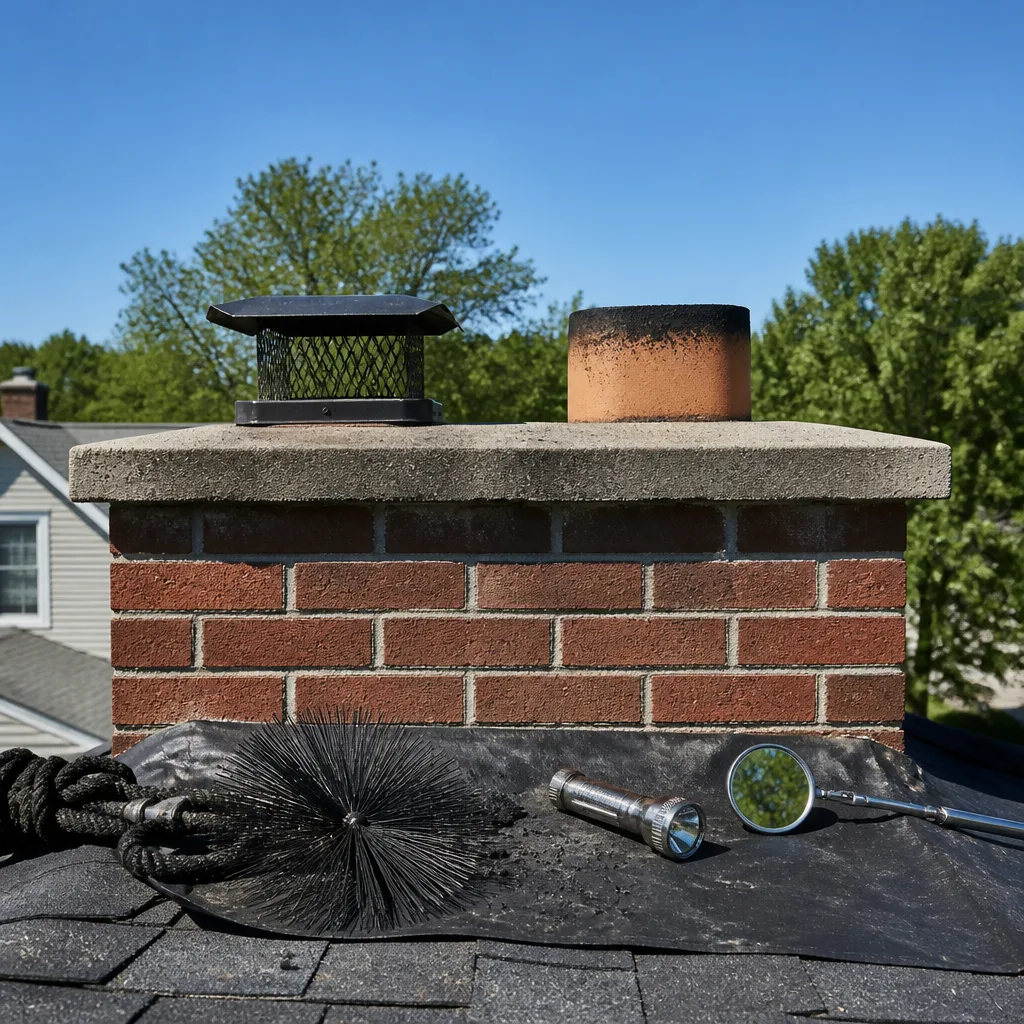 Sweep & inspection
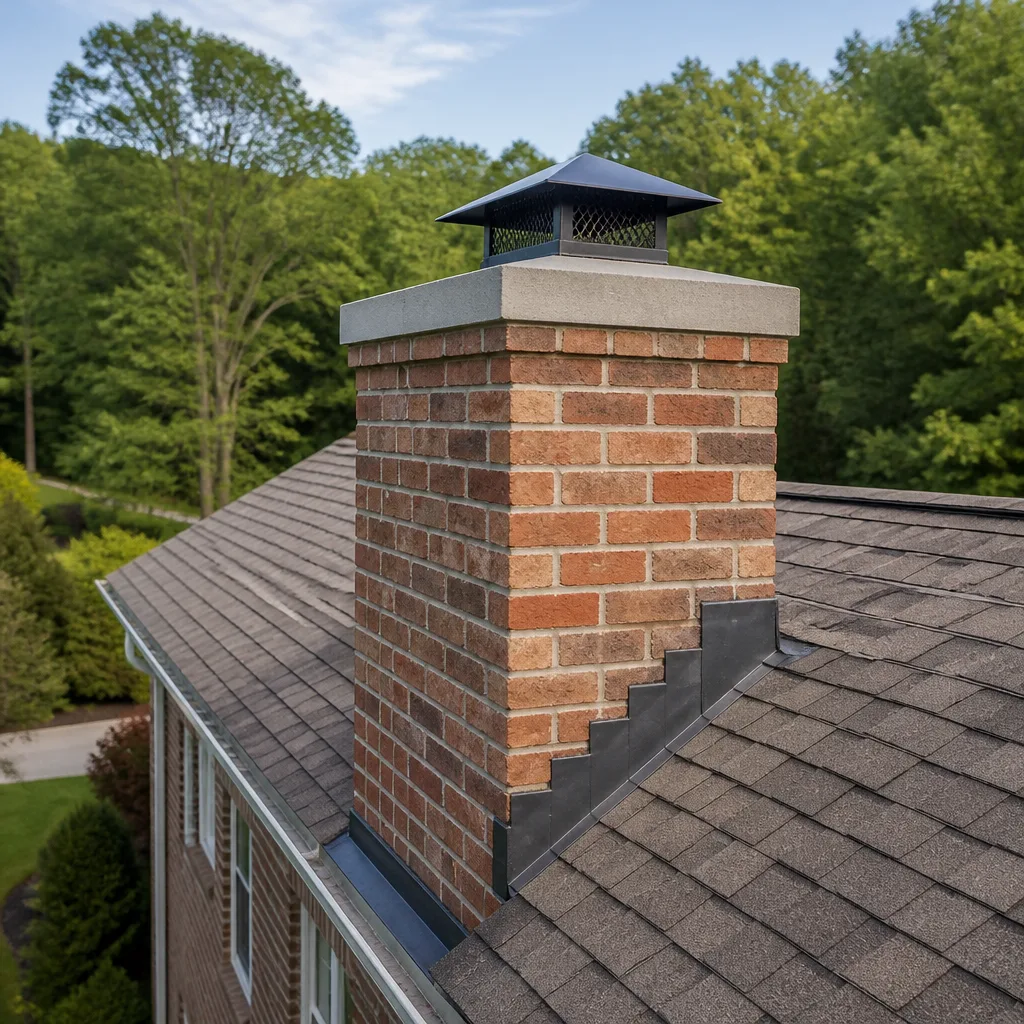 Caps & crowns
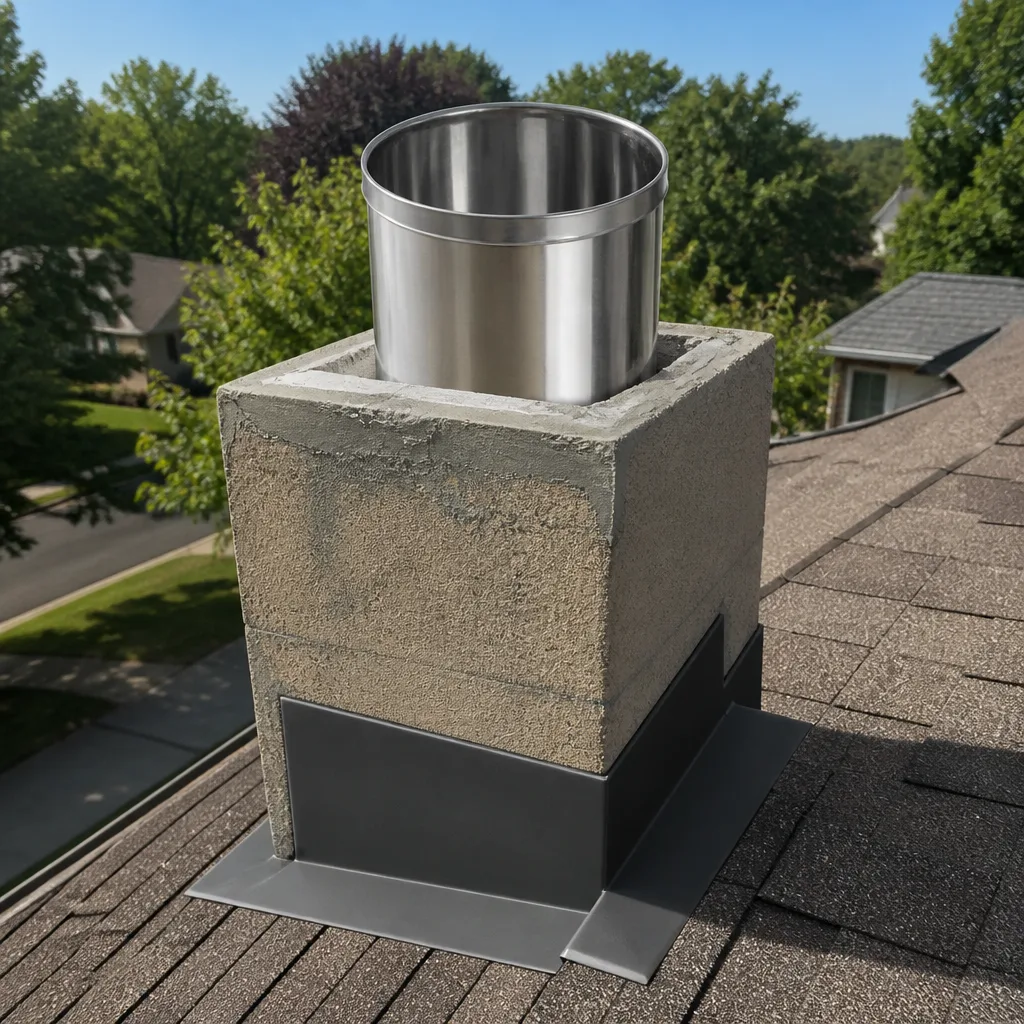 Flue relining
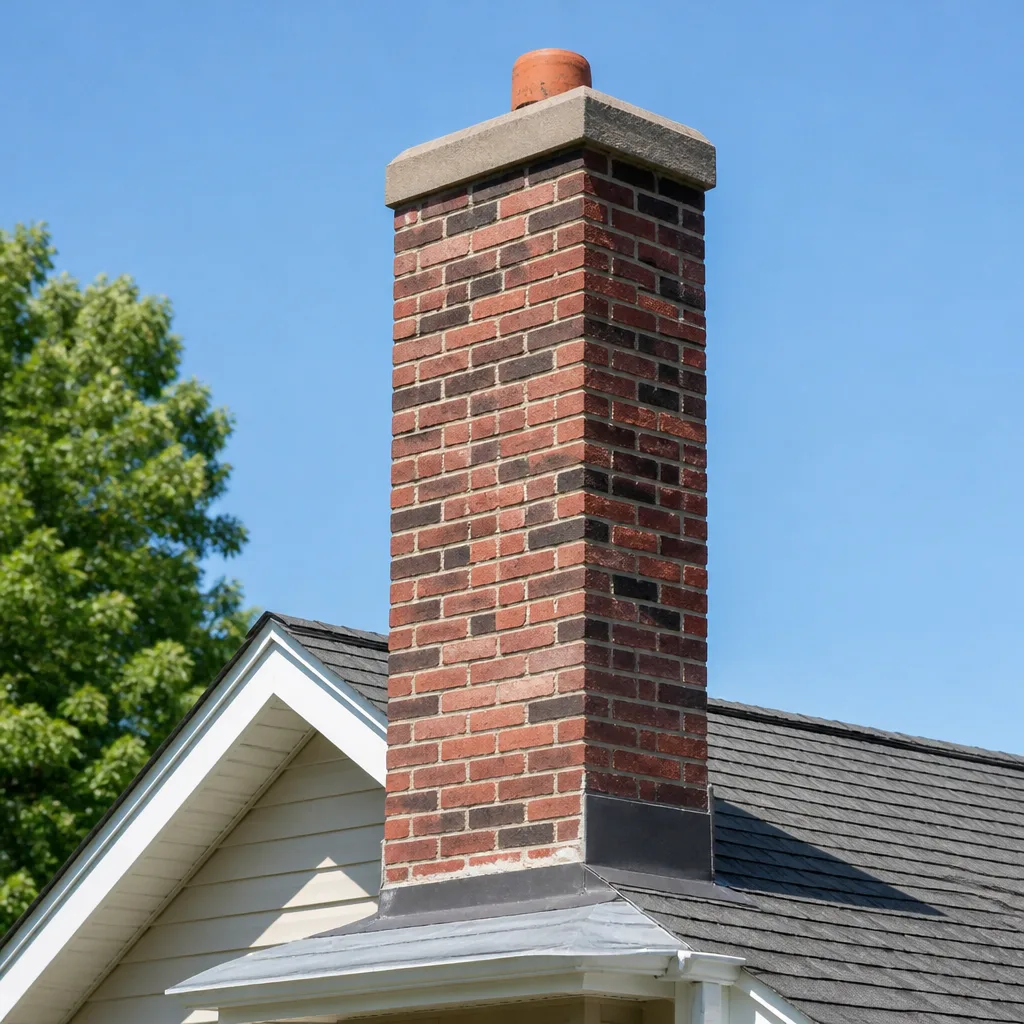 Masonry repair
 Gas fireplace service
Level 1 sweep and inspection to the NFPA 211 annual standard - flue, crown, cap, and flashing checked and photographed
Chimney sweep logs do not sweep chimneys. They loosen some creosote - which then falls where a brush and vacuum still have to collect it.
Chimney Sweep Troubleshooting in Sunnyside: Common Problems and How to Fix Them
Two fireplaces can look identical from the couch. One lets smoke roll into the room because the flue is packed with creosote. The other pulls fine on a calm day and then spills smoke the moment the wind shifts, because the chimney top sits in a pressure zone it can’t escape. Homeowners read both as “my chimney is blocked” and reach for the same fix. That’s how a small problem gets expensive. In this guide, we map the symptoms you’re actually seeing, smelling, and hearing in a Sunnyside home to the specific failures behind them, so you can describe what’s wrong in plain language and know which repairs make sense. We’ll also show you what to check safely, where to stop, and when a professional needs to take over.
Quick Answer
Most chimney “draft problems” in Sunnyside are not blockages at all. They’re failures in one of three zones: the flue interior (creosote buildup, liner cracks, or missing flue tile), the chimney top (a missing or damaged cap, a cracked crown, or a top sitting in a turbulent pressure zone created by neighboring rooflines), or the firebox and smoke shelf (a geometry issue or a damper that won’t open fully). Diagnosing which zone is failing, using smoke behavior, odor patterns, and sound, is what tells you whether you need a sweep, a liner repair, a cap and crown fix, or a structural repair. Get the zone right and the fix is usually straightforward.
Styles & brands we work with
- Sweep & inspection
- Caps & crowns
- Flue relining
- Masonry repair
- Gas fireplace service
Table of Contents
- Symptom-to-Cause Map: What Each Problem Actually Means
- Smoke Rollout vs. Backdraft: Why They’re Not the Same Problem
- Sunnyside’s Urban Roofline and Pressure Problems
- Creosote Restriction vs. Structural Crack: Visible Clues
- Ticking, Popping, Whistling: What Chimney Sounds Tell You
- What You Can Safely Document Yourself
- Odor Intrusion: Where It Comes From and Why It Changes
- Repair Options That Don’t Require a Full Rebuild
Symptom-to-Cause Map: What Each Problem Actually Means
Before you call anyone, the most useful thing you can do is write down what the chimney is doing and when. Symptoms cluster into distinct patterns, and each pattern points to a different part of the system. Here’s how we sort them.
- Smoke that rolls out at the top of the firebox opening usually means the flue isn’t pulling hard enough, or the smoke shelf is pushing smoke forward instead of up. Common causes: creosote restriction, a partially closed damper, a fire that’s too large for the flue, or negative pressure in the room.
- Smoke that pours in only when the wind blows from one direction points to the chimney top: a missing cap, a damaged crown, or a top sitting in the wake of a taller neighboring structure.
- Cold air rushing down the chimney when there’s no fire is a backdraft issue, not a blockage. It’s about pressure and temperature, not something stuck in the flue.
- Musty or ashy odor that appears when it’s humid or when the heat comes on is usually odor intrusion from creosote residue or moisture in the masonry, not active smoke.
- Ticking or popping sounds when the fire is burning can be normal thermal expansion, or it can indicate a liner that’s failing. The pattern and location matter.
- Whistling or roaring draft sounds suggest airflow restriction or a cap or damper with a gap that’s whistling air through it.
Write down which of these you’re seeing, when it happens (first fire of the season, windy days, after a rain), and where in the room the smoke or smell appears. That three-part note is what turns a vague complaint into a diagnosable problem. In Sunnyside, where brick rowhouses and apartment buildings sit shoulder to shoulder, wind direction and neighbor height do more to change chimney behavior than most homeowners expect.
Smoke Rollout vs. Backdraft: Why They’re Not the Same Problem
These two get confused constantly, and the fix is completely different. Smoke rollout is smoke escaping into the room at the firebox opening while a fire is burning. Backdraft is air (and sometimes smoke) coming down the flue when there’s a fire, or when there isn’t one. Rollout is usually a flue capacity or geometry problem. Backdraft is a pressure or air-supply problem.
Here’s how to tell them apart:
- Watch the smoke at the firebox opening. If the smoke rises, curls at the top of the opening, and spills forward into the room while a fire is going, you have rollout. The flue is either undersized for the fire, restricted by creosote, or the smoke shelf is angled wrong.
- Feel for airflow with no fire. Hold your hand near the open firebox on a cold day. If you feel cold air moving down and toward the room, that’s backdraft. Warm air should be rising up and out.
- Try the crack-a-window test. Cracking a window near the fireplace for a few seconds and watching whether the problem improves tells you a lot. If it does, the chimney is fighting negative pressure in the house. If nothing changes, the flue itself is restricted.
Rollout caused by creosote restriction is a cleaning problem. Rollout caused by an undersized flue or a mis-built smoke shelf is a structural problem. Backdraft is almost always solved by correcting pressure: a taller cap, a different cap style, a make-up air source, or addressing competing exhaust. Fixing the wrong one wastes money and leaves the real issue in place.
Sunnyside’s Urban Roofline and Pressure Problems
A chimney needs a clean, unobstructed path for exhaust, and it needs the top of the flue to sit in a spot where the wind doesn’t create a downwash. In a dense Sunnyside block, both of those conditions can be harder than they look from the street.
Here’s what we see in the neighborhood:
- Taller neighboring buildings create a wind shadow. When a structure two doors down is taller than your chimney, the wind that comes over that building tumbles down into the space between them. Your chimney top sits inside that turbulent pocket, and smoke gets pushed back down the flue.
- Flat-roof exhaust and vent stacks compete for air. Nearby rooftops in Sunnyside often carry HVAC exhaust or other vents that send air straight across your chimney top. If that air is warmer or faster than your exhaust, it can overpower the draft.
- Tightly built row houses seal in pressure. Modern caulk, insulation, and window replacements make houses airtight. A house that can’t pull fresh air in will pull it down the chimney instead, and that’s a backdraft.
- Chimneys close to the building line get more wind shear. A flue that’s near an outside wall takes more buffeting than one centered on the roof.
None of these problems look like a chimney issue from inside the house. They look like “the fireplace smokes when the wind is from the northwest,” or “the fire starts fine and dies down an hour later.” Those are pressure signatures. A cap designed to resist downwash, a taller flue extension, or a make-up air strategy can usually correct them, and that’s why a proper chimney cap & crown assessment belongs in this conversation.
Creosote Restriction vs. Structural Crack: Visible Clues
Both of these cause poor draft, and both can produce smoke where you don’t want it. From the room, they can feel identical. The difference matters because one is a cleaning and the other is a repair, and the wrong one wastes your money.
What you can safely look for yourself, from the firebox, with no fire, using a flashlight:
- Cracked flue tiles or visible gaps between tiles suggest a structural failure. If you can see daylight, soot streaks running through a crack, or a piece of tile missing from the flue wall, stop here and call a professional. A cracked flue tile lets heat and gases escape into the structure of the chimney.
- Glossy, hard, tar-like coating on the flue walls is glazed creosote. This is the third-stage creosote, and it’s a fire risk. It doesn’t come off with a brush the way stage-one soot does, and it’s a job for a trained technician.
- Flaky, crusty, or soot-like buildup is stage-one or stage-two creosote. It’s normal between cleanings and is what a routine sweep removes.
- Crumbling mortar joints inside the flue point to moisture damage or age in the flue liner. A chimney repair plan comes next, and sometimes a liner restoration.
- White, chalky staining on the chimney exterior is efflorescence, and it usually means moisture is moving through the masonry.
If what you see is faint glaze or light soot, you’re looking at a chimney sweep problem. If you see actual cracks, missing tile, or daylight, you’re looking at a repair problem, and it needs a camera inspection to see how far it goes. Our technicians have up to 13 years of experience reading these clues, and the picture they build from a camera inspection is the one that should drive any repair decision.
Ticking, Popping, Whistling: What Chimney Sounds Tell You
A chimney that’s working properly is quiet. It hums a little when a fire is going, and it’s silent otherwise. Sounds that change with the fire, the weather, or the season usually mean something specific.
- Ticking, tapping, or metallic pinging when the fire is hot: thermal expansion. Metal liners expand as they heat. That said, if the ticking is loud, comes from inside the wall, or is new this season, a liner inspection is worth doing. Stainless components from lines like DuraFlex are built for this, but they can loosen or shift over time.
- Popping or crackling louder than wood should: could be creosote burning in the flue. Creosote fires sound like a low roar or repeated pops. If the fire sounds like that, close the damper, get everyone out of the house, and call the fire department. A creosote fire can spread into the chimney structure without being visible from the room.
- Whistling: air moving through a gap. Common at the damper, at a cap with a damaged screen, or at a chimney top with a cracked crown. The location of the sound tells you where to look.
- Rattling or banging with wind: a loose cap, a cap screen that’s come free, or a damper that isn’t seated.
- Rumbling or a low whoosh from the top of the chimney: draft rushing past an obstruction. Get it inspected.
Sounds from the firebox (front of the system) and sounds from the top of the chimney (back of the system) usually have different causes. If the sound comes from the firebox, suspect the damper or the fire itself. If it comes from up the wall or the roof, suspect the liner, the cap, or the crown. Anyone looking at your chimney should be able to tell you which one they hear and why.
What You Can Safely Document Yourself
You can gather a lot of useful information without climbing anything or opening anything. Doing so makes the professional conversation faster and more accurate, and it helps you avoid paying for work you might not need. Here’s what’s safe.
- Note the smoke behavior. Which direction does smoke roll, where in the room does it appear, and how long after lighting the fire does it start? Detail here is diagnostic.
- Note the odor and timing. When does the smell appear? On humid days? After rain? After the heat comes on? First fire of the season? That pattern narrows the cause considerably.
- Note the fire behavior. Does it light easily and then die? Does it burn well only on one side? Does it roar or does it struggle? Fire behavior tells you about air supply.
- Take photos from the ground of the chimney top. If you can see the top from the sidewalk or from a window across the street, a phone photo (zoom in) can show a missing cap, a rusted screen, or a stained crown. Do not climb onto the roof to get a better shot.
- Look up the flue from the firebox with a flashlight. You can see the first few feet of the flue from inside the firebox. That’s enough to spot a broken tile edge or a thick creosote coating. Do not reach in, do not put a tool up the flue, and do not use a brush on a long pole from below.
- Check the damper and the firebox door operation. Does the damper open fully and stay open? Do the doors close completely? That’s safe to check.
- Note the exterior of the chimney if visible. Staining, loose bricks, or whitish powder on the masonry are all worth photographing from the ground.
Where self-inspection stops: anything on the roof, anything inside the flue beyond the first few feet, anything that requires opening a flue joint or removing a component, and any situation involving an active fire or smell of gas. Roofs are dangerous, and flues are small, hot, and dark. Do not climb onto a roof, and do not open the cleanout and start brushing. That’s the line.
Odor Intrusion: Where It Comes From and Why It Changes
Chimney odor is one of the most misdiagnosed problems in the trade. Homeowners often assume it means the chimney is dirty, but a chimney that smells has one of three things going on, and only one of them is a cleaning issue.
- Creosote residue odor smells like ash and tar and gets worse in humid weather. Creosote absorbs moisture, then releases it slowly with odor. A proper sweep removes it.
- Moisture in the masonry smells musty and earthy and often appears after heavy rain or when the weather turns warm after cold. It usually means a cracked crown, a missing cap, or failing mortar joints.
- Backdraft-driven odor pulls the smell of a cold firebox or creosote residue down into the house when the pressure shifts. It’s the same pressure mechanism that causes backdraft in the flue, and it changes with the weather.
If the smell gets worse when your neighbors run exhaust fans or when the heat comes on in your building, you’re looking at pressure. If it gets worse after rain, you’re looking at moisture. If it’s persistent and worse in summer humidity, you’re looking at creosote residue. One call resolves all three, because they’re all part of the same chimney system, and finding the right cause is the whole job. Ask us about HeatShield liner restoration before assuming a smelly chimney means a rebuild.
Repair Options That Don’t Require a Full Rebuild
One of the most common things we hear from Sunnyside homeowners is some version of, “another company told me I need a whole new chimney.” Sometimes that’s true. Often it isn’t. Here’s what a full-scope chimney specialist can actually offer, and what each fix is good for.
- Sweeping. Removes creosote and soot buildup. Fixes draft restriction from normal accumulation. Does not fix a damaged liner, a cracked crown, or a pressure issue.
- Cap and crown work. Replaces or installs a cap and repairs the crown. Fixes water intrusion, animal entry, and some downwash problems. We install components from trusted product lines like Famco and Copperfield for this work.
- Liner repair and relining. Fits a new stainless liner (DuraFlex is one of the lines we install) or restores the existing flue interior when the original tile is cracked or spalling. Restoring the tile avoids the cost and disruption of a full rebuild in many cases.
- HeatShield liner restoration. A resurfacing process that repairs a deteriorating flue interior without removal and replacement. This is the option most sweep-only companies can’t offer, and it’s often the difference between “your chimney needs a rebuild” and “we can restore this.”
- Structural repair. Repoints mortar, replaces brick, and rebuilds sections of the chimney where the masonry itself has failed. Olympia Chimney components are part of the toolbox for chimney system parts and accessories.
- Fireplace repair. Damper repair, firebox rebuild, refractory panel replacement, and hearth repairs. Problems at the firebox are caught and fixed, not referred out.
Because we handle the full chimney system, from the firebox all the way to the cap, the answer to “what’s wrong and what will it take to fix” comes from the same team. There’s no hand-off to a separate contractor, and no gap between the diagnosis and the repair. We inspect it. We repair it. Same team, same standard.
Common Mistakes to Avoid
- Assuming smoke means a blockage. Smoke rollout can be a creosote restriction, a cracked flue tile, or a pressure problem. If you treat it as one thing, you’ll pay for a sweep and still have the problem.
- Confusing backdraft with a draft problem. Backdraft is cold air coming down the chimney, and no amount of sweeping fixes it. It’s a pressure and air-supply problem.
- Ignoring the chimney top when the symptom is inside. A missing cap or a cracked crown in Sunnyside doesn’t announce itself from the living room, but it can drive odor, water damage, and downwash. Get the top checked.
- Treating glossy creosote as “just soot.” Glazed creosote is a fire risk, and it doesn’t come off with a brush. If your flue is glazed, you need a trained technician and possibly a different approach to fix it.
- Getting a report and nothing else. A written report without a next step leaves you to call someone else to fix the problem. Ask for the inspection and the repair quote together.
- Booking a sweep when the real problem is the flue itself. If your symptoms point at cracks, missing tiles, or daylight in the flue, a sweep isn’t the fix. Ask for an inspection first.
- Climbing onto the roof to check it yourself. However quick it looks, a ladder on a Sunnyside roofline is more dangerous than the chimney problem you’re trying to solve.
See the difference
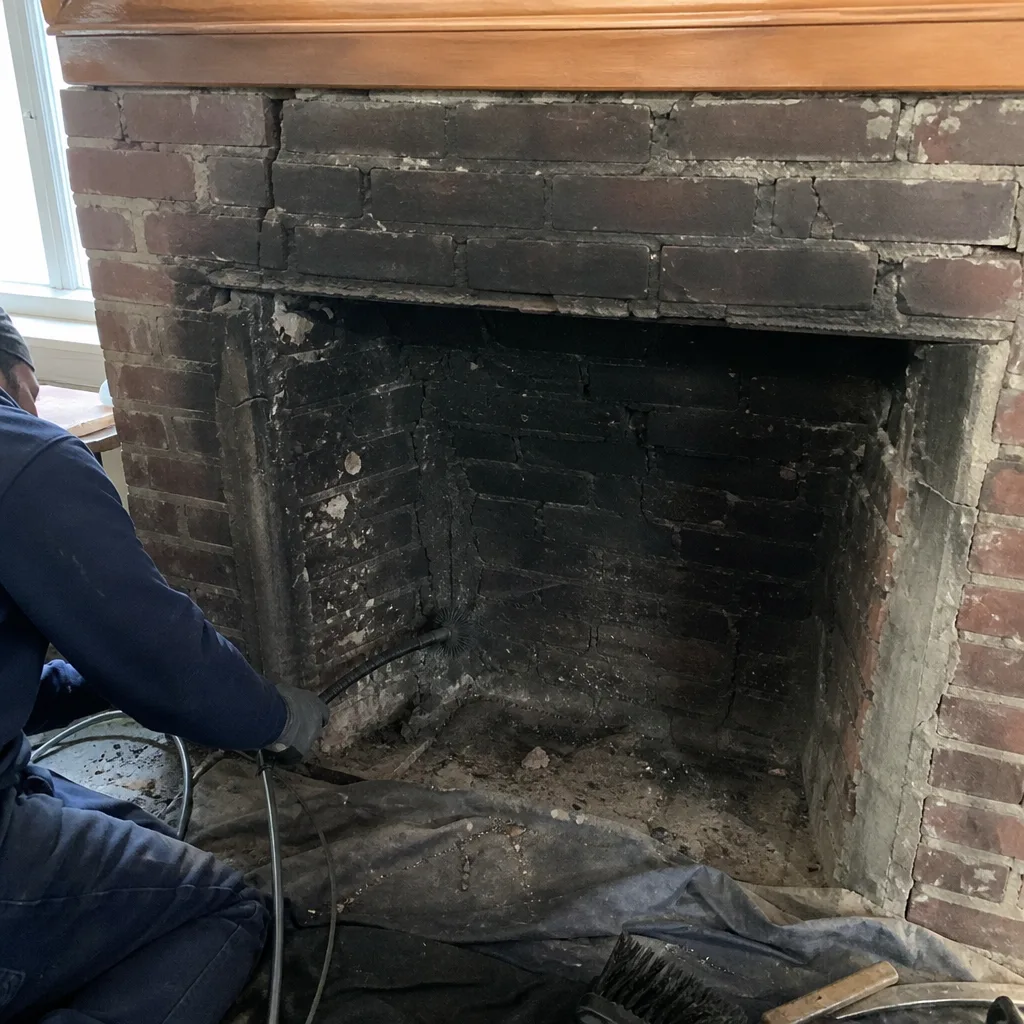 Before
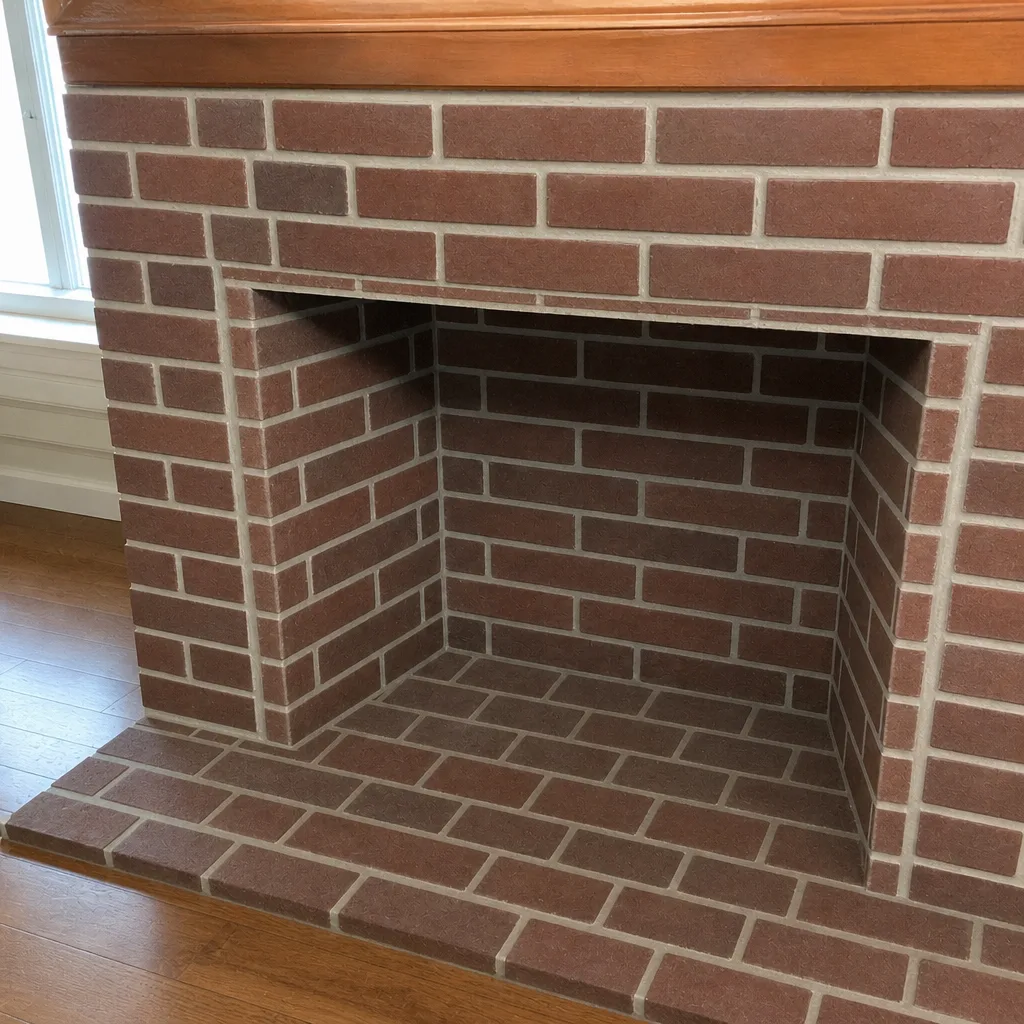 After
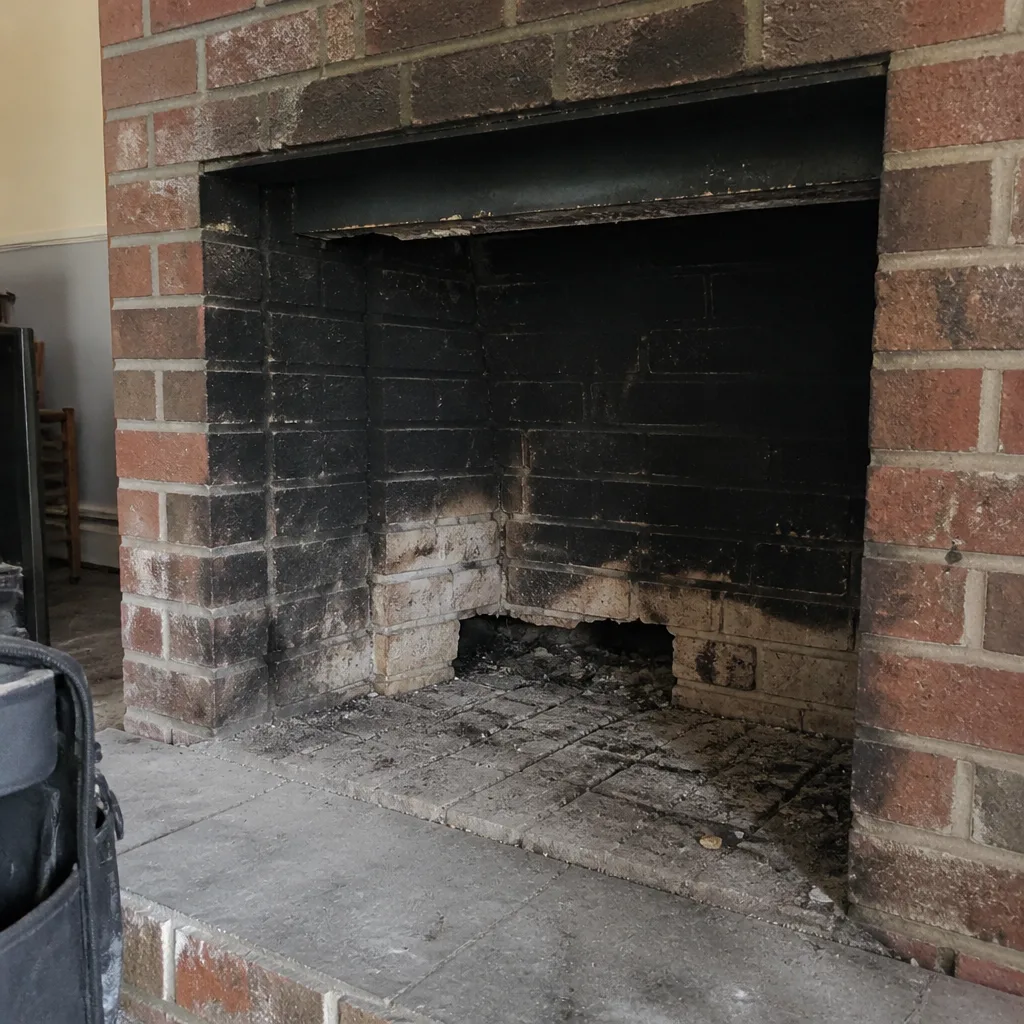 Before
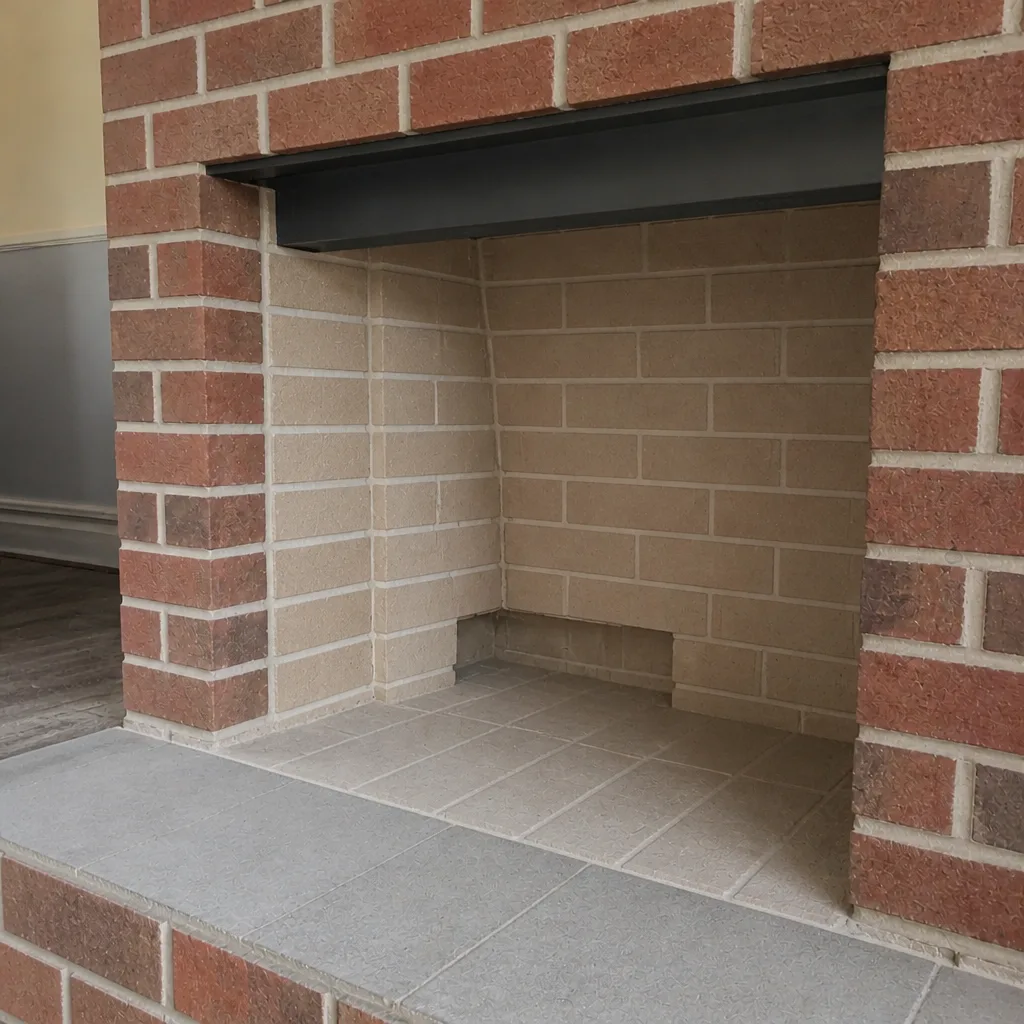 After
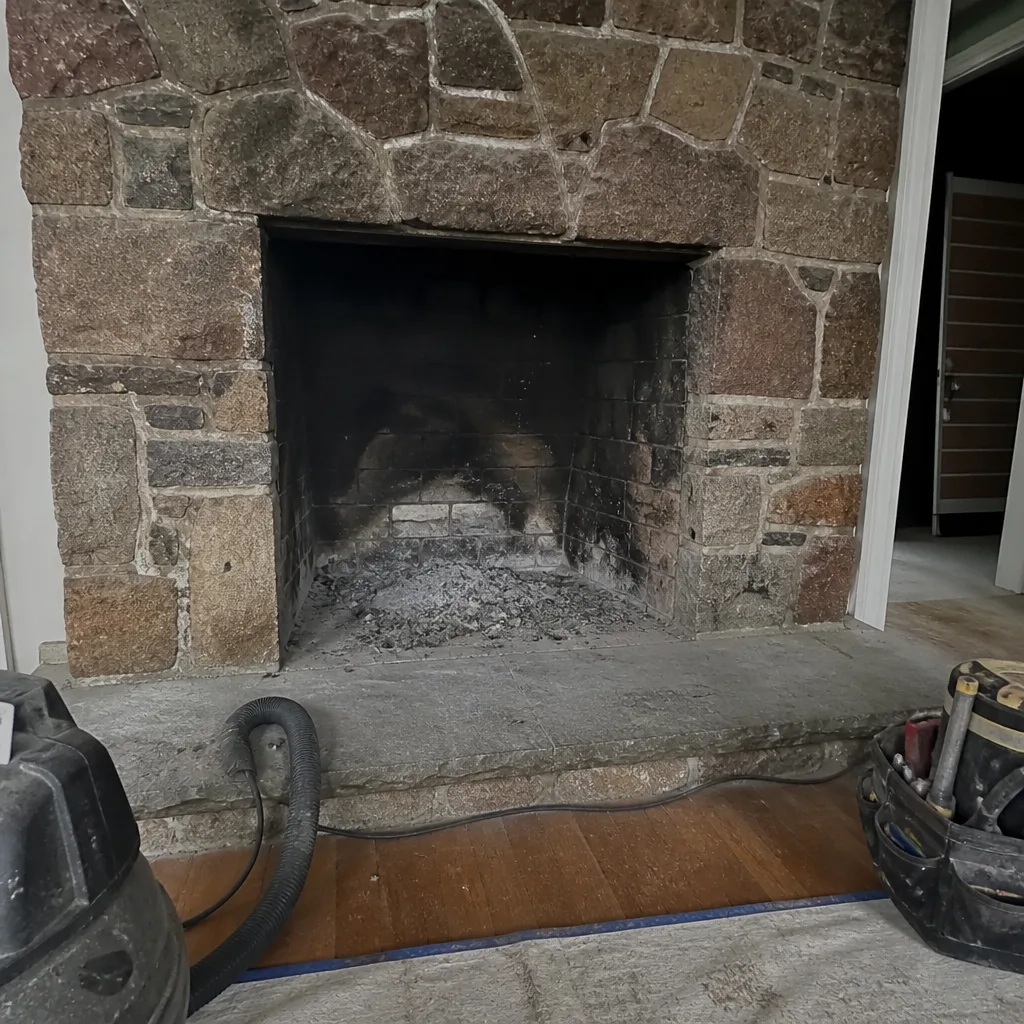 Before
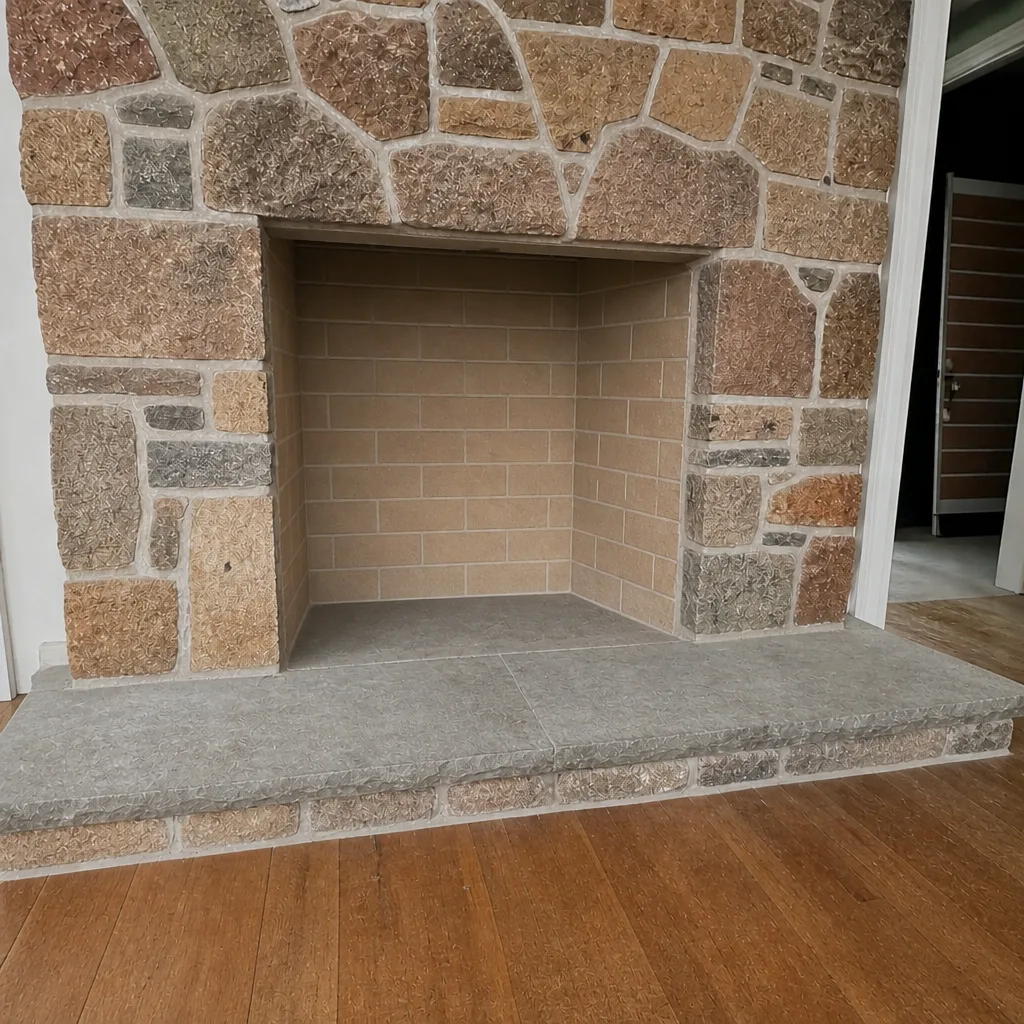 After
When to Call a Professional
Call a professional if you see or smell any of the following: smoke that spilling into the room while a fire burns, cold air moving down the flue when there’s no fire, ash or musty odor that won’t clear, glossy creosote on the flue walls, a cracked flue tile or missing flue material, water staining on the chimney, a missing or damaged cap, or a popping sound during a fire. Also call after any significant storm that moves through Sunnyside, since wind events can shift a cap, crack a crown, or loosen masonry that isn’t visible from the ground. The general rule is simple: if the problem changes how smoke leaves the house or lets water or weather in, it’s a professional’s call. The estimate is free. Chimney Sweep Sunnyside offers free estimates in Sunnyside; call (833) 472-1614. We answer 24/7. Fast dispatch from 7am to 7pm, Sunday through Friday.
Frequently Asked Questions
Wind-direction smoke is a pressure problem, not a blockage problem. When the wind comes over a taller neighboring building, it tumbles down into the space around your chimney top and pushes air back down the flue. A cap designed to resist downwash, a taller flue extension, or a make-up air strategy usually solves it. Call (833) 472-1614 for an exact quote on a chimney top assessment; estimates are free.
Feel for airflow with no fire burning. If cold air is moving down the flue toward the room, that’s backdraft and it’s a pressure issue. If the flue feels still or the draft is weak but air is not reversing, that points to a restriction like creosote buildup or a cracked tile. A camera inspection is the reliable way to know for sure.
Smoke that pours into the room while a fire is burning is a safety concern, not just an annoyance, because it’s carrying combustion gases into the living space. Stop using the fireplace and get it looked at. A popping or roaring sound during a fire, or smoke that smells acrid, is a fire department call first and a chimney inspection second.
No. A cracked flue tile lets heat and combustion gases escape into the chimney structure, and in a densely built block like Sunnyside, there’s little margin for that. The good news is that many cracked flues can be restored with a liner repair process, sometimes with HeatShield liner restoration, rather than requiring a full rebuild. Ask about restoration before assuming a rebuild is the only option.
Musty odor with no fire is usually moisture in the masonry, and it often points to a cracked crown, failing mortar joints, or a cap that’s not keeping water out. It can also be creosote residue absorbing summer humidity. A chimney inspection that includes the top of the chimney will tell you which, and whether it’s a cap and crown fix or a chimney repair.
Most chimneys need sweeping based on how often they’re used and how much creosote builds up. A working fireplace burned regularly should be checked annually, and a camera inspection is worth doing whenever a symptom shows up. Our technicians have up to 13 years of experience and can tell you whether your chimney needs a routine sweep or something more. Call (833) 472-1614 for a free estimate.
The Bottom Line
Most chimney problems are diagnosable. The smoke, the odor, the sound, the timing: each one points to a specific zone of the chimney system, and each zone has its own repair path. Creosote restriction is a sweep. Cracked tile or failing tile joints are a liner repair, and often not a rebuild. Downwash and backdraft are a pressure and cap fix. Musty odor is moisture, usually from the crown or the cap. Getting the zone right on the front end is how you avoid paying for a fix that doesn’t fit the problem. If you’re unsure which category you’re in, Chimney Sweep Sunnyside can look at it, quote it, and take care of it in one visit.
Call (833) 472-1614 for a free estimate. We answer 24/7. Fast dispatch from 7am to 7pm, Sunday through Friday. We handle the full chimney system, from firebox to cap, installed with DuraFlex, Famco, Olympia Chimney, and Copperfield materials we trust. A clean chimney is the starting point; a safe chimney system is the goal.
Written by the team at Chimney Sweep Sunnyside.