
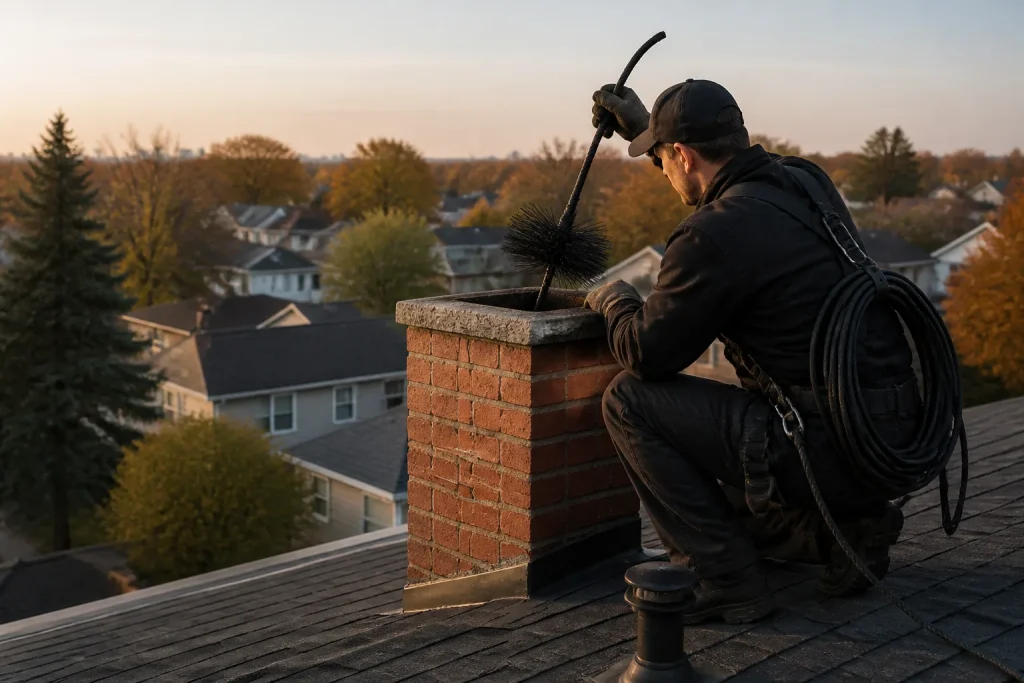
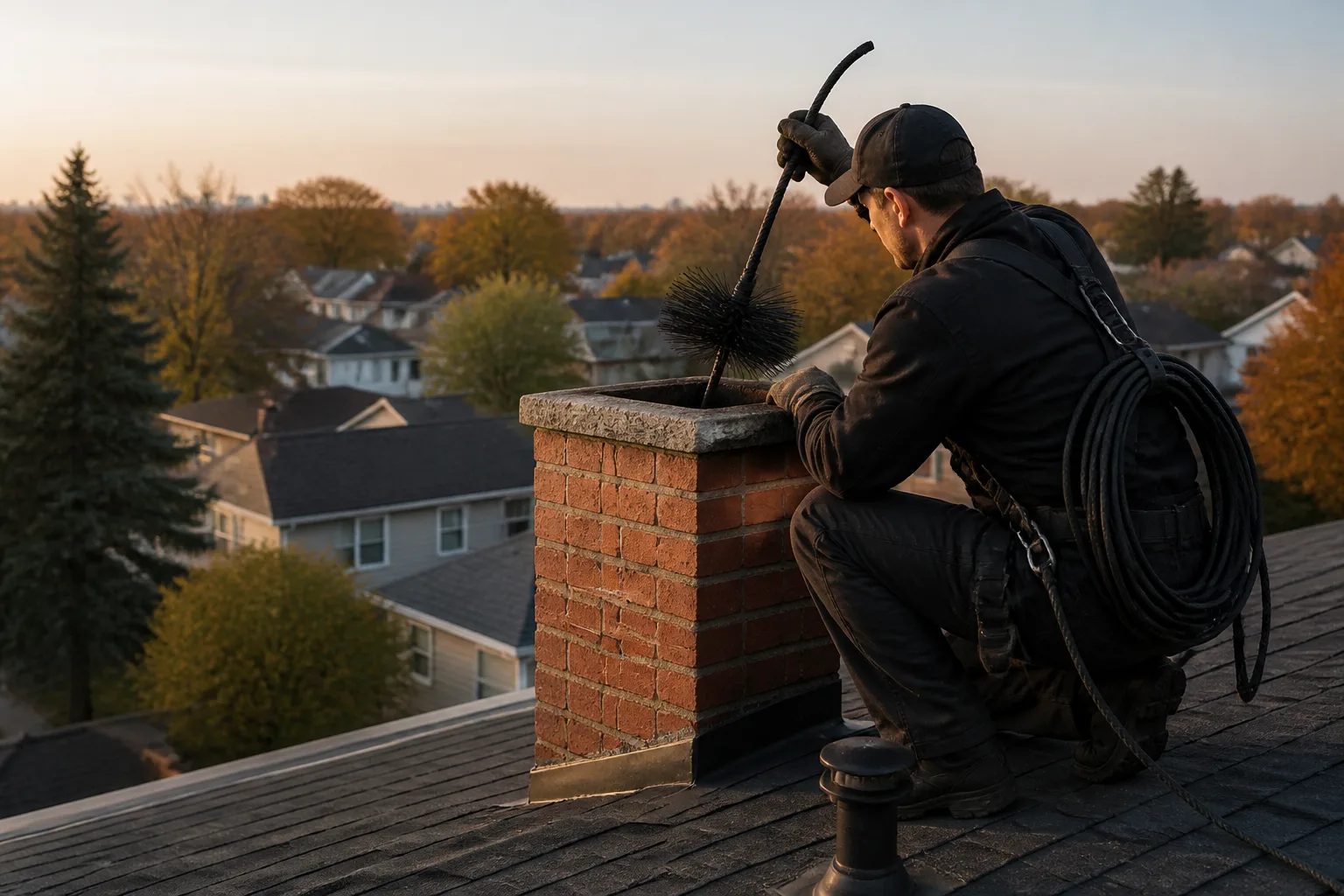
Top Signs You Need Chimney Cleaning Service – Don’t Ignore These
Most homeowners wait for a sign before they book a cleaning. Smoke rolling into the room. A smell that won’t quit. A dark streak above the fireplace. That approach feels reasonable, and it’s also the reason so many chimney fires start in fireplaces nobody was worried about. Chimney fires burn at over 2,000°F and can damage the liner, framing, and mortar joints within minutes, and most of them happen in chimneys that showed no symptoms the last time anyone looked.
So here’s the honest version of this article: the warning signs you can see are the late ones. The real story is happening up inside the flue, out of sight. Below we’ll walk through both, starting with what you can observe and then moving to what actually determines whether your chimney is safe to burn. If you’d rather not sort it out yourself, call (833) 472-1614 and we’ll take a look.
Why Visible Warning Signs Are a Lagging Indicator
The symptoms everyone knows about, things like odor, smoke spillage, and weak draft, are real warning signs. The problem is they show up after the condition has already developed, sometimes after it’s been building for a season or two. By the time a fireplace smells like a campfire every time it’s cold out, there’s usually a meaningful layer of deposit sitting on the flue walls.
Creosote is the byproduct of incomplete combustion, and it accumulates whether or not you notice it. It doesn’t announce itself. It builds in layers, and the inside of a flue doesn’t give you any feedback while it does. That’s why the industry frames chimney maintenance around scheduled inspection rather than symptoms. A sweep and inspection on a regular rhythm catches the buildup at a stage where a standard cleaning handles it. Waiting for the smell means waiting until the problem is harder and more expensive to correct.
In Sunnyside, that distinction matters more than in a lot of places, because of what the housing stock here looks like. More on that below.
What Creosote Stages 1, 2, and 3 Actually Look Like
Your chimney professional isn’t just judging “dirty or clean.” Creosote is graded by stage, and the stage is what determines whether a normal sweep will work or whether something more involved is required.
- Stage 1: Soot and light, flaky deposits. This is the routine case. Standard sweeping tools remove it cleanly.
- Stage 2: Crusty, brittle, sometimes shiny deposits that have baked onto the flue surface. Still removable with proper sweeping and rotary tools, but it takes real work and the flue needs a proper inspection afterward.
- Stage 3: Glazed, hardened creosote with the texture of candle wax or hard tar. This is the threshold. Standard sweeping tools are no longer effective at this stage, and it’s also the most combustible form of the three. It’s the condition behind many of the fires described above.
Stage 3 buildup is the reason this article exists. A chimney can reach that point without a single visible symptom inside the living room. There’s no smell that reliably tells you you’re there. The only way to know is to look up the flue with the right tools.
If a flue is glazed and the liner itself is deteriorating, a full rebuild isn’t automatically the answer. HeatShield liner restoration resurfaces a damaged flue interior from the inside, which addresses deterioration without tearing the chimney apart. It’s worth asking about before assuming the worst. You can read more about chimney repair options for the structural side of the same problem.
Signs That Are Specific to Sunnyside Homes
A lot of the housing here is older, and a lot of it was built with shared flues serving more than one unit. That creates problems you won’t read about in a generic chimney article.
Shared flue contamination. When two units feed one flue, a problem on one side affects the other. A neighbor’s heavy burning, a blocked or damaged flue tile, or a disconnected appliance connection can push exhaust or odor into your unit. Weak draft in one apartment can be a symptom of a problem that isn’t in that apartment at all. If your smoke smells come and go depending on what someone else is doing, that’s a clue.
Oil-to-gas conversion residue. Many older homes in this area switched heating appliances over time, and the residue from that history doesn’t always get fully cleaned out. Oily or chemical odors that don’t match what you’re burning, especially when the heat first comes on, are worth investigating rather than airing out.
Spalling debris in the firebox. Finding flakes of masonry, tile, or mortar grit sitting in the firebox after a burn is a structural signal, not a cleaning one. That material is coming off the flue or the smoke chamber, and it points to deterioration that a sweep won’t fix. In our experience on Sunnyside masonry, this is the sign that most often turns a routine cleaning into a repair conversation.
The One Interior Sign That’s a Genuine Emergency
If you see tar-like or oily black residue dripping or staining inside the firebox, stop burning and have the chimney evaluated before you light another fire. That residue is a strong indicator that heavy creosote has accumulated and is migrating, and it’s one of the few signs that justifies treating the chimney as unsafe to use in its current condition until someone qualified has looked at it.
Two other conditions belong in the same category: a fire that won’t draw or fills the room with smoke no matter what you do, and any sign of a draft coming back down the flue when nothing is burning. Both suggest a blockage or a serious draft failure, and neither gets better by trying again.
When to Call a Pro
If you can see and touch a creosote problem, you’re already past the point where a homeowner should be working on it. Stage 2 and Stage 3 deposits require professional tools, and the flue interior needs to be inspected before anyone assumes a sweep is sufficient. We handle the full chimney system, from firebox to cap, and the same team that inspects the flue can quote any repair it finds. Ask for a chimney sweep and an inspection together so you get one straight answer instead of two.
Related services in Sunnyside: if the inspection turns up a missing or damaged chimney cap & crown, we install those as well, usually with Famco and Gelco components.
Why Winter Burn Frequency Changes the Schedule
The annual sweep is the baseline, not the whole plan. Creosote accumulation is a function of how much you burn, what you burn, and how the appliance is running. A fireplace used on cold nights through a long winter can build a meaningful layer in a shorter window than the once-a-year schedule assumes.
- You’re burning most nights through the cold months.
- You notice the fire is harder to light or the draft feels weaker than it used to.
- You added a new appliance or made a heating change without an inspection afterward.
- You smell smoke in the room when the fire is going, especially at startup.
If any of those apply, a mid-season inspection is worth the call. Catching a stage 2 layer in the middle of winter is a cleaning. Catching it in spring, after it’s had another few months to bake on, is a bigger job. If you’re scheduling anyway, a proper Chimney Sweep Sunnyside visit includes a camera inspection, and you’ll see the photos yourself before we recommend anything.
What Actually Happens If You Skip It
Nothing dramatic, most of the time. That’s the trap. Chimneys fail quietly, and the failure mode is either a chimney fire or a liner that has deteriorated to the point where combustion gases can reach the framing or the living space. Carbon monoxide is the other concern. A blocked or damaged flue that can’t vent properly is a venting problem, and venting problems aren’t visible from the fireplace opening.
The cost difference between catching this at stage 1 and catching it at stage 3 is the difference between a cleaning and a liner restoration. We say that plainly because it’s the honest math, not because we’re steering you toward the expensive option. Sometimes a chimney just needs a sweep and that’s the whole story. When it is, we’ll tell you.
The Bottom Line
- Visible signs like odor and smoke spillage are late indicators, not early ones.
- Creosote reaches its most dangerous stage (stage 3, glazed and hardened) without a visible warning inside the house.
- Standard sweeping tools stop being effective at stage 3, which is exactly why scheduled inspection beats symptom-based calls.
- In Sunnyside’s older housing stock, shared flues, conversion residue, and spalling debris deserve specific attention.
- Visible tar or oily black residue in the firebox means stop burning and get it evaluated.
A clean chimney is the starting point. A safe chimney system is the goal. Our technicians have up to 13 years of experience, and we work with professional product lines including DuraFlex, Olympia Chimney, and HeatShield, so the fix and the inspection come from the same place. If you’re in Sunnyside and need help, Chimney Sweep Sunnyside offers free estimates. Call (833) 472-1614. We answer 24/7. Fast dispatch from 7am to 7pm, Sunday through Friday.
Frequently Asked Questions
Once a year is the standard baseline, and the Inspection standard used across the trade supports an annual evaluation as the starting point. If you burn heavily through the winter or have a shared flue, a mid-season look is worth scheduling as well. The right interval depends on what’s actually inside your flue, which is why we inspect before recommending a timeline.
No. You can spot some signs, like soot at the firebox or a smoke smell, but those are late indicators and they don’t tell you what stage the creosote has reached. Stage 3 glazed creosote in particular can build up without any visible symptom inside the home. A camera inspection is the only reliable way to know. Call (833) 472-1614 for an exact quote.
Stage 3 creosote is glazed and hardened, with the texture of candle wax or hard tar, and standard sweeping tools don’t remove it. That’s the line where professional-grade rotary equipment and proper inspection become necessary. We don’t recommend homeowners attempt removal at that stage, and we don’t, because the process can damage the flue or the liner. Have it evaluated instead.
The chimney keeps accumulating creosote, and the risk of a chimney fire goes up with it. A fire can travel through a damaged or glazed flue in minutes and reach the framing. The other risk is venting failure: a blocked or deteriorated flue that can’t clear combustion gases, including carbon monoxide, from the living space. Call (833) 472-1614. Estimates are free.
Written by the team at Chimney Sweep Sunnyside.
Need Chimney Cleaning Help?
Call Chimney Sweep Sunnyside - the local pro we connect you with is licensed and insured, with free written estimates in Sunnyside.
(833) 472-1614